
Navigating perimenopause can be bewildering. For many, it’s a time marked by many physical and emotional changes.
There are two phases of perimenopause. The first phase often begins before any noticeable changes to the menstrual cycle. The second phase is widely known for hot flashes and irregular periods. Yet many people are surprised to learn that there are over 130 potential symptoms. Reviewing this comprehensive checklist can help you recognize what’s happening in your body. It can empower you to seek the right support and care—and to give yourself the grace you deserve.
What Is Perimenopause?
It can begin as early as your mid-30s but most commonly starts in the early-mid 40s. It can last for a few years or more than a decade. The unpredictable nature of these hormonal changes is responsible for the vast and varied symptoms that many people experience. Perimenopause officially ends when you have gone 365 days since the start date of your last menstrual cycle.
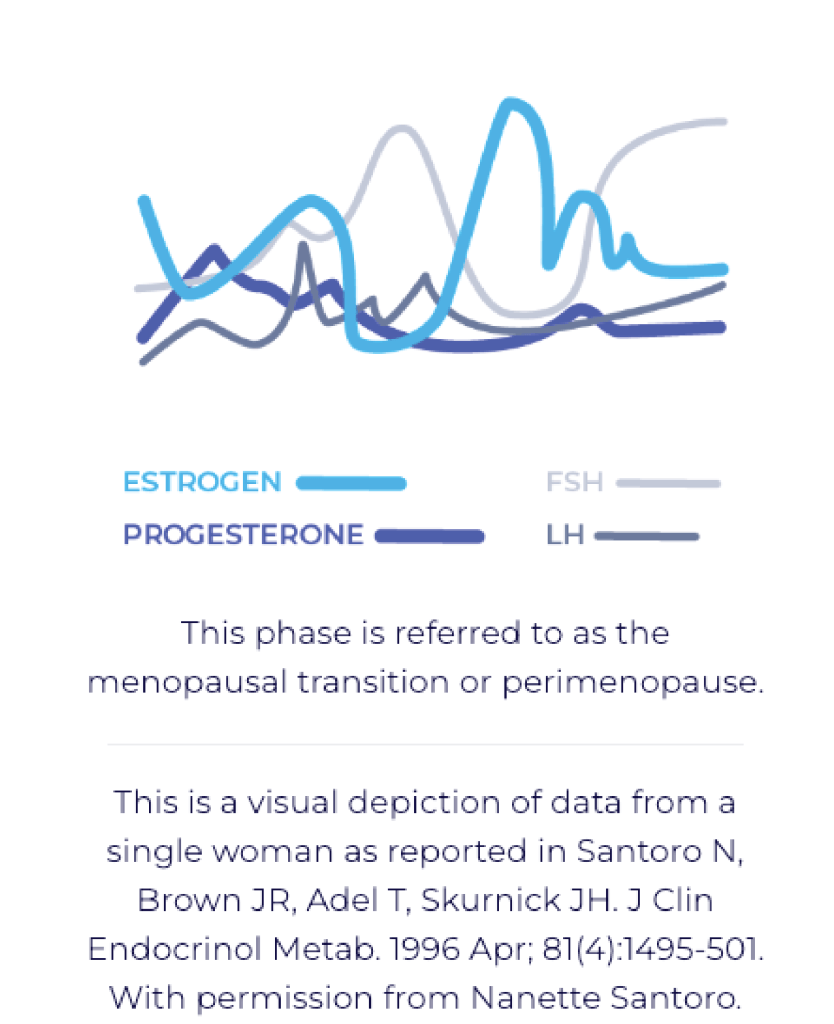
Perimenopause is the natural transitional phase leading up to menopause. During this time, your body’s production of estrogen, progesterone, FSH (follicle-stimulating hormone), and LH (luteinizing hormone) start to fluctuate. See the depiction of one woman’s hormones below!
A Comprehensive Symptoms List
This list is organized by category to help you better understand the wide-ranging effects of perimenopause. While you won’t experience all of them, it’s common to experience many. This checklist can be a crucial first step toward acknowledging your symptoms. The downloadable checklist is a great way to identify, explore, and to share them with your healthcare provider. It’s time to be heard!
Mood and Emotional
☐ Anxiety
☐ Depression (new onset or worsening)
☐ Panic attacks
☐ Mood swings
☐ Irritability / Increased frustration
☐ Increased feelings of rage or impatience
☐ Crying spells / Increased tearfulness
☐ Feelings of overwhelm
☐ Difficulty managing stress
☐ Low motivation or apathy
☐ Loss of confidence and self-esteem
☐ Feeling like you’re not yourself
☐ Feeling like you’re “going crazy”
☐ Social withdrawal / loss of empathy
☐ Intolerance to certain people, situations, or sounds
Brain and Cognitive
☐ Brain fog
☐ Difficulty concentrating
☐ Short-term memory decline
☐ Difficulty with word retrieval (e.g., “tip of the tongue” moments)
☐ Feeling “scattered” or disorganized
Sleep
☐ Insomnia (difficulty falling or staying asleep)
☐ Waking frequently
☐ Restless sleep
☐ Restless Leg Syndrome
Vascular and Thermoregulation
☐ Hot flashes
☐ Night sweats
☐ Cold flashes
☐ Chills
☐ Heart palpitations
☐ Heart racing
Pelvic and Urogenital
☐ Irregular periods (shorter, longer, lighter, or heavier)
☐ Irregular cycles (shorter or longer)
☐ Increased premenstrual cramps
☐ Vaginal dryness and irritation
☐ Painful sex (Dyspareunia)
☐ Atrophic vaginitis (vaginal atrophy) / Genitourinary Syndrome of Menopause (GSM)
☐ Bladder leaks (urinary incontinence)
☐ Urinary tract infections (UTIs)
☐ Urinary urgency or increased frequency
☐ Pelvic floor dysfunction or weakness
☐ Bladder prolapse
☐ Pelvic pain (non-menstrual)
Sexual Health
☐ Low libido / Decreased sex drive
☐ Difficulty with arousal
☐ Difficulty achieving orgasm
Musculoskeletal
☐ Joint pain
☐ Stiffness (especially in the morning)
☐ Muscle aches (Myalgia)
☐ Muscle Mass loss (Sarcopenia)
☐ Tendon and ligament injury
☐ Osteoporosis (long-term impact)
☐ Swelling of hands / feet
☐ Sore feet
☐ Voice changes: shaky, hoarse, tired (Hormonal Dysphonia)
Skin, Hair, and Nails
☐ Dry and itchy skin (Pruritus)
☐ Changes in skin elasticity
☐ Acne (adult-onset or worsening)
☐ Hair loss / thinning / brittle
☐ Increase in facial, neck, or chest hair
☐ Brittle nails
Gastrointestinal
☐ Bloating (Belly Bloat)
☐ Gas
☐ Constipation
☐ Diarrhea
☐ Acid reflux
☐ Indigestion
☐ IBS (Irritable Bowel Syndrome) – new onset or worsening
☐ Nausea
Oral and Dental
☐ Burning mouth syndrome / Burning tongue
☐ Dry mouth
☐ Metallic taste in mouth
☐ Gum problems
☐ Tooth decay
☐ Tooth sensitivity
Sensory
☐ Dizziness / Lightheadedness
☐ Balance issues or altered spatial awareness
☐ Electric shock sensations
☐ Formication (crawling sensation on or under the skin)
☐ Numbness or tingling (Paresthesia) in extremities
☐ Tinnitus (ringing in ears)
☐ Changes in vision / Blurred vision
☐ Dry eyes
☐ Heightened or changing sense of smell or taste
Weight
☐ Weight gain (especially around the abdomen)
☐ Slowed Metabolism
☐ Difficulty losing weight
Other
☐ Fatigue / Low energy
☐ Headaches and/or Migraines
☐ Breast tenderness / Discomfort
☐ Breast enlargement
☐ Changes in body odor
☐ New or worsened allergies or asthma
☐ Widespread burning and soreness
When to Talk to a Doctor 👩⚕️
If you’re experiencing any of these symptoms, it’s a good idea to talk to a healthcare provider. Taking this checklist with you to your appointment can be a great starting point for a productive conversation. There are many treatments and lifestyle changes available to help manage perimenopausal symptoms and improve your well-being.
Thank you to our Medical Contributor
Shabnam das Kar, MD, Functional Medicine Doctor and former OBGYN
References
The information presented here is compiled from a wide range of medical literature and is supported by key peer-reviewed publications. The following organizations are particularly relevant to understanding the broad spectrum of perimenopausal symptoms:
- North American Menopause Society (NAMS): A leading authority on menopause and perimenopause, providing evidence-based information for both healthcare professionals and patients.
- The Journal of Clinical Endocrinology & Metabolism (JCEM): A highly respected peer-reviewed journal that often publishes research on the hormonal and clinical aspects of perimenopause.
- Study of Women’s Health Across the Nation (SWAN): A major multi-site, multi-ethnic study that has provided crucial long-term data on the physical and psychological changes women experience during the menopausal transition.
We invite you to share your thoughts