

Menopause can be categorized as the time after a woman’s last period, usually occurring during a woman’s mid-40s to mid-50s. During this period, the lack of a menstrual cycle and “periodic exposure” to sex hormones such as estrogen and progesterone can cause changes to target tissues and the reproductive system. Estradiol is a hormone with “extensive metabolic effects,” as it affects the central nervous system by increasing food intake and basal energy consumption or basal metabolism. The suppression of estrogen causes basal metabolism within females to decrease tremendously. In addition, the estrogen alpha receptors are also suppressed which causes a higher calorie intake. Several chronic diseases are also associated with menopause and the decline of estrogen levels. Many of these diseases include cardiovascular diseases, tumors (especially hormone-sensitive breast cancer), insulin resistance, type 2 diabetes, and osteoporosis (1)
To control symptoms in menopause alongside taking care of one’s body throughout changes in physiological process, diet needs to be considered, addressed, and changed to adapt to one’s changing body. As mentioned earlier, menopause is associated with an increased risk of chronic diseases, but it also is associated with the prevalence of obesity (1).
Nutrition Recommendations:
Mediterranean Diets (2)
- Characterized by foods with anti-inflammatory and antioxidant properties.
- Evidence also shows that this diet affects weight management, blood sugar control, and cardiovascular diseases.
Dairy, Calcium-Rich Foods, and Vitamin D
- The decline in estrogen levels during menopause can increase one’s risk of fractures due to decreased bone density.
- Dairy products contain calcium phosphorus, potassium, magnesium, and vitamins D and K which are essential for bone health. Dairy can also improve sleep as tryptophan, an amino acid found in dairy, helps people sleep. In addition, some evidence shows that dairy consumption is associated with a decreased risk of premature menopause (2).
- Examples:
- Milk
- Yogurt
- Cheese
Vegetables (3)
- Leafy vegetables can help with managing weight and bone health.
- Vegetables that are good sources of calcium:
- Spinach
- Turnips
- Collard greens
- Other vegetables that help maintain a healthy weight and reduce severity of hot flashes include:
- Broccoli
- Cauliflower
- Asparagus
- Brussel sprouts
- Kale
Lean Protein (3)
- Helps maintain menopause symptoms, weight management, bone strength, and muscle mass
- Examples:
- Grilled chicken
- Tuna
- Turkey
- Lean beef
- Tofu
- Lentils
- Beans
- Red meat is okay every once in a while, but be careful with cholesterol intake.
Phytoestrogens: Soy products and more (2,3)
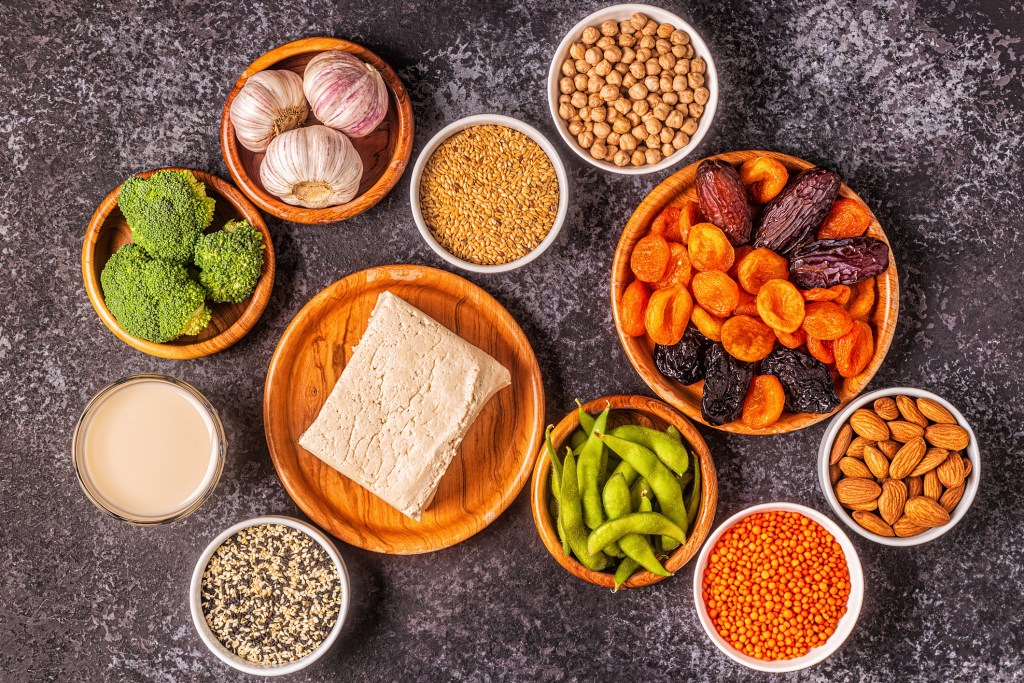
- Soy products and other foods can help ease menopausal symptoms due to a chemical similar to estrogen: phytoestrogens.
- Examples:
- Soy beans
- Soy flour
- Tofu
- Soy milk
- Chickpeas
- Peanuts
- Flax seed
- Barley
- Grapes
- Berries
- Plums
- Green and black tea
Whole Grains (2)
- A diet high in whole grains has been shown with a reduced risk of heart disease, cancer, and premature death. In addition, a review has shown women who consume more whole grains, vegetables, and unprocessed foods tend to have less severe menopausal symptoms than those who eat fewer of these foods.
- Examples:
- Brown rice
- Whole wheat bread
- Barley
- Quinoa
- Oats
- Rye
- Look for food labels that contain primarily whole grains
Items to Limit in Menopause:
- Limiting the following foods are linked to reducing menopausal symptoms such as hot flashes, weight gain, sleep problems:
- Caffeine
- Alcohol
- High salt foods such as soups, deli meats, and pretzels
- Highly processed foods such as candy, potato chips, and fried foods
- Food and Drinks with added sugars such as soda, energy drinks, and baked goods.
For more information:
Finding a registered dietitian or nutritionist can help create a personalized eating plan or dietary interventions that cater to your symptoms and menopausal experience.
We invite you to share your thoughts