

Almost every week, I’m asked about longevity or longevity-related supplements. While longevity isn’t my primary focus, brain health—a critical factor in longevity—is at the core of what I do.
But what is longevity? In my opinion, it’s deeply individual. For a few people, it may mean climbing mountains in their 80s, but across the board people want a fully functioning brain at that age. These goals aren’t contradictory, but they require different approaches. Someone aiming to scale peaks needs a higher level of physical activity today than someone whose focus is on maintaining the strength to carry groceries.
While the jury is still out on many of the acclaimed benefits of longevity supplements, one thing is clear: building and preserving muscle is undeniably beneficial for longevity.
Sarcopenia, the gradual and accelerated loss of muscle mass, strength, and function, is commonly seen in older adults, individuals with a sedentary lifestyle, and women following menopause.
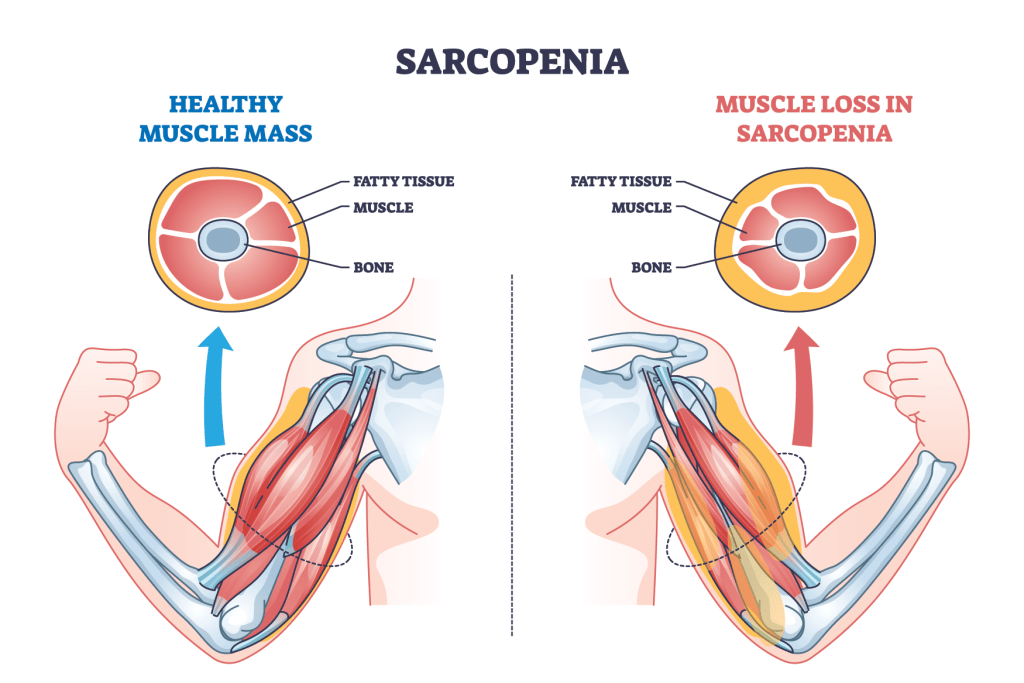
Muscles not only support strength and balance but also protect bones, enhance metabolic health by keeping blood glucose levels optimal and reduce the risk of falls and chronic diseases.
How to Measure Muscle Mass and Strength
- Gold Standard: DEXA scans provide the most accurate measurement but require specialized equipment and cost more.
- Smart home scales using bioelectrical impedance (BIA) are convenient for tracking trends, while tape measurements or grip strength tests offer low-cost ways to monitor changes.
- Hand grip test is a simple and effective way to measure muscle strength using a device called a dynamometer. The test measures the maximum force you can exert while squeezing the dynamometer with one hand. It involves gripping the device as hard as possible for a few seconds. (Image below)
- Sit-to-Stand Test: This evaluates lower body strength and endurance. Sit in a standard chair with arms crossed over your chest. Stand up fully and sit down as many times as possible in 30 seconds. Fewer repetitions may indicate reduced lower body strength, which is important for daily activities and fall prevention. Here’s a video showing how to do this test.
Key Strategies to Preserve Muscle Mass
- Strength Training: Aim for 2–3 sessions weekly, focusing on major muscle groups. Many women are hesitant to lift weights due to the misconception that it will make them look bulky. However, this is a myth; women’s biology is significantly different from men’s, making it unlikely for them to develop a bulky, masculine appearance (except in the case of professional bodybuilders with highly specialized training).
- Protein Intake: Include 0.5 g/lb of body weight in high-quality protein daily. It is important to keep in mind that increasing protein intake goes together with resistance training. Only increasing protein intake is not enough to build muscles.
- Reduce Inflammation: Unhealthy food choices are a major contributor to inflammation. Identify and address any food sensitivities, such as those to gluten or dairy. Focus on eating minimally processed, high-protein foods, limit or eliminate sugars to reduce inflammation.
- Reduce continuous sitting to less than 3 hours a day.
- Address Hormone Deficiencies:
- In Men: Testosterone deficiency can accelerate muscle loss. Medical evaluation and interventions, such as hormone therapy (HT), can help optimize testosterone levels.
- In Women: Declines in estrogen, progesterone, and testosterone during menopause contribute to muscle and bone loss. Addressing these deficiencies through lifestyle strategies and hormone therapy can reduce their impact and improve muscle preservation.
You can build muscles at any age!
An 8-week study on frail individuals averaging 90 years old found that high-intensity resistance training significantly improved muscle strength, size, and functional mobility, even in those as old as 96 years.
In summary, preserving muscle mass through strength training, eating the right foods and addressing factors like inflammation and hormone deficiencies are some of the most effective ways to enhance longevity and maintain independence as you age.
By taking proactive steps today, you can build a stronger, healthier future.

Functional Medicine Specialist
Brain Health Coach
Hormones, Women’s Health, Behavior Change
We invite you to share your thoughts